Top 7 Alternatives of PerformYard for Goal Management
You are comparing goal management tools because PerformYard's feature set no longer matches your team's rhythm or budget. The right alternative will change how your employees track priorities and how managers review progress. This article breaks down seven options, starting with HeyRamp, and gives you clear criteria for evaluating each one.
By the end, you will know which platforms offer the strongest OKR support, which integrate cleanly with your existing stack, and which one deserves your team's attention first. You will also have a practical framework for making the final call without getting lost in feature lists.
What to Look For in Goal Management Alternatives
When evaluating goal management alternatives, you need to prioritize features that directly support your organization's strategic alignment, employee engagement, and performance review cycles. The right tool should bridge the gap between high-level company objectives and the daily work of individual team members.
As you compare PerformYard alternatives, focus on how each platform handles alignment, OKR support, and integration with your existing systems. These three pillars determine whether the software becomes a daily workspace or just another forgotten dashboard.
The sections below drill into specific aspects of goal management software. You will learn which core features matter most, how to evaluate OKR frameworks, and why seamless integration with your HR stack can make or break adoption.
Core Goal-Setting Features and OKR Support
Look for tools that offer robust OKR frameworks, cascading goals, and real-time progress tracking to ensure alignment from company objectives down to individual contributors. The best platforms let you create objectives and key results that roll up into departmental and organizational targets automatically.
Cascading goals are essential for maintaining strategic alignment across every team. When a sales team sets a quarterly objective, the software should show how that objective connects to the company's revenue targets and how each rep's individual goals support the broader mission.
Real-time visibility into progress keeps employees engaged and managers informed. Look for tools that offer automatic progress calculations, status updates, and visual dashboards that make it easy to spot stalled initiatives before they become problems.
Check-in functionality matters as much as the initial goal setup. Regular check-ins replace annual performance appraisal anxiety with continuous feedback and coaching opportunities. These conversations should feel natural and documented within the platform.
Here is a checklist of features to evaluate in any goal-setting tool:
- OKR creation with customizable key result types and weighting
- Alignment visualization showing how goals connect across teams
- Progress tracking with automatic status indicators and health checks
- Check-in scheduling with templates for structured conversations
- KPI dashboards that display real-time metrics and trends
- Goal history and activity feeds for transparency and accountability
- Competency management and employee development tracking
Employee goal setting should feel lightweight, not bureaucratic. The best tools make it simple for individuals to update progress without extensive training. When employees can quickly log progress and request feedback, engagement naturally improves.
KPI dashboards serve different audiences differently. Executives need high-level views of organizational health, while managers need drill-down capabilities to see individual contributions. Ensure the tool supports both perspectives without compromising usability.
Integration Capabilities and Ease of Use
Seamless integration with your existing HR stack and an intuitive user interface are critical to user adoption and data consistency. A goal management tool that requires manual data entry will quickly fall out of use, regardless of how powerful its features are.
Look for integrations with communication platforms like Slack and Microsoft Teams, as well as your HRIS, payroll system, and single sign-on (SSO) provider. These connections keep goal tracking and performance reviews in the flow of work rather than forcing employees into a separate system.
SSO capabilities are non-negotiable for most organizations. Employees should authenticate once and access all their HR software without remembering additional passwords. Without this, adoption rates typically suffer.
HRIS integration ensures that employee data, organizational charts, and role information stay current. When someone changes teams or gets promoted, their goals should follow them automatically without manual reassignment.
Evaluate the user interface design carefully during demos. Ask yourself whether employees at all technical levels could navigate the platform comfortably. A clean, modern interface reduces onboarding time and encourages daily engagement.
Mobile accessibility is another crucial factor. Managers and employees often need to update goals or provide feedback between meetings or while traveling. A responsive mobile experience keeps performance management moving even when people are away from their desks.
Common integration pitfalls include limited API access, delayed data synchronization, and poor documentation. Ask vendors about their API rate limits, sync frequency, and whether integrations are bidirectional or one-way only.
Request a free trial or pilot program before committing. Have a small team test the tool with real goals and workflows. Pay attention to how quickly they become productive and whether they naturally remember to use the platform without reminders.
Onboarding time matters more than most buyers realize. If implementation takes months or requires extensive consulting, the total cost of ownership rises significantly. Look for tools that offer self-service setup and clear documentation.
1. HeyRamp - Best Overall
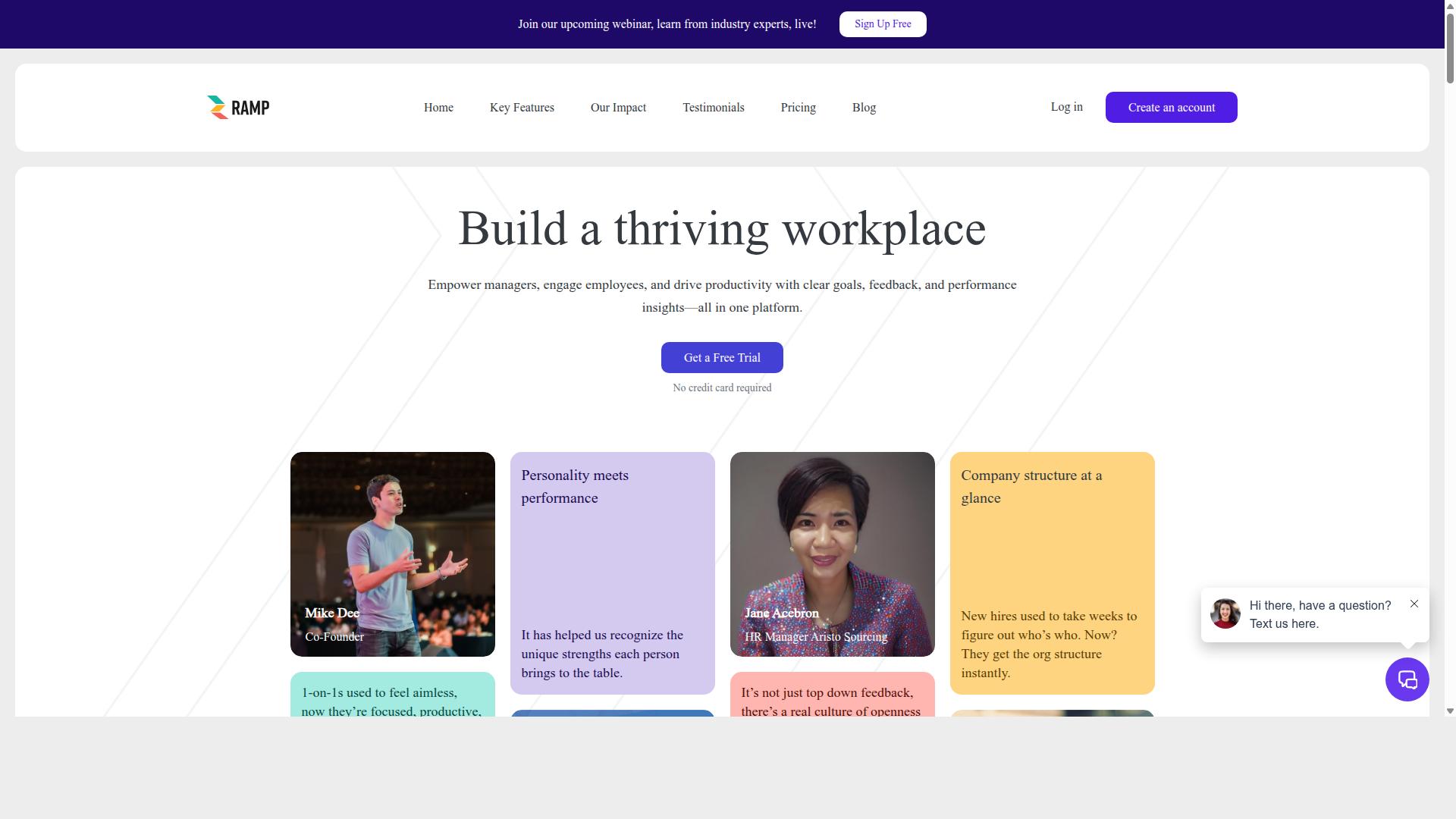
HeyRamp stands out as the best overall goal management alternative due to its unified platform that combines performance reviews, continuous feedback, and goal tracking with built-in coaching tools. For teams evaluating PerformYard alternatives, HeyRamp delivers the full scope of performance management software in one place. The platform covers employee goal setting, performance appraisals, and real-time feedback without requiring multiple subscriptions.
What makes HeyRamp the top pick is its balance of depth and simplicity. It handles objectives and key results alongside day-to-day check-ins, so managers and employees stay aligned throughout the review cycle. The built-in coaching and training resources also address employee development directly, which many goal-setting tools overlook.
The sections below break down HeyRamp's unified platform and its transparent pricing model. Both factors contribute to its position as the leading choice for teams seeking a complete replacement for PerformYard.
Unified Performance and Goal Management Platform
HeyRamp combines goal setting, performance reviews, and continuous feedback in one platform, eliminating the need to juggle multiple disconnected tools. This integrated approach keeps employee goal setting, KPI tracking, and performance appraisal data in a single source of truth. Teams avoid the data inconsistencies that come from syncing separate systems.
The platform offers company structure visualization, so leaders can see how cascading goals flow across teams. 1-on-1 meeting tools include organized agendas and action tracking, which keep check-ins productive and accountable. Feedback tools support peer reviews and 360-degree feedback, while performance reviews run through structured cycles with compliance documentation and time-stamped secure records.
Goal management includes OKR software with real-time progress visualization, giving managers and employees a clear view of objectives and key results. Additional features include:
- Guided conversation templates and coaching tips for managers
- Sentiment prompts and automated reminders for consistent engagement
- KPI snapshots and people analytics dashboards for workforce insights
- Personality insights and testing to support team development
- Confidential manager notes and leadership insights for sensitive contexts
- Built-in training videos covering 1-on-1s, performance reviews, and personality testing
This integration simplifies processes significantly. Instead of switching between a goal-tracking app, a feedback tool, and a review system, HR teams manage everything in one place. Consolidated platforms can reduce administrative overhead and improve data accuracy, which directly supports better talent management decisions.
Transparent Pricing and Built-in Coaching Tools
HeyRamp offers transparent, flat-rate pricing starting at $5 per seat per month, and includes built-in training and coaching tools to support employee development. The pricing model is straightforward compared to many HR software options that hide costs behind custom quotes. Teams can predict their budget without surprises.
The exact pricing structure is simple to understand:
- Monthly plan: $5.00 per seat, paid monthly
- Yearly plan: $3.00 per seat per month, paid annually
- Enterprise: custom pricing paid per seat
- 14-day free trial with no credit card required
The trial includes full access from day one, so teams can evaluate the complete feature set before committing. Users can also switch plans anytime, which reduces the risk of long-term lock-in.
Beyond the price, the built-in coaching tools add notable value. Training videos on 1-on-1s, performance reviews, and personality testing help managers build skills without external coaching costs. Guided conversation templates and coaching tips provide practical support during check-ins. For employee development, these resources turn routine performance management into an ongoing growth process, which is a key differentiator among PerformYard alternatives.
2. Lattice
Lattice is a well-known performance management platform that emphasizes continuous feedback and employee development. It combines performance reviews with OKR software, making it a popular choice for HR-led organizations that want to align individual goals with broader company objectives.
The platform covers several core areas of talent management. Teams can run structured performance reviews, track objectives and key results, and encourage real-time feedback through its interface. Lattice also includes tools for employee engagement and career development, which helps managers support long-term growth rather than just annual appraisals.
One of Lattice's main strengths is its user-friendly design. The interface is clean and intuitive, which lowers the learning curve for employees and HR administrators alike. It also offers strong integration options with common HR software, so organizations can connect their existing tools without major disruption. This makes it a solid option for companies that already have a mature HR tech stack in place.
However, there are some potential drawbacks to consider. Pricing may be higher than some alternatives, particularly for smaller teams or startups with limited budgets. Lattice has a starting price of $11 per user per month with annual billing, and no free plan is mentioned in publicly available information. That means organizations need to budget carefully before committing.
Lattice also focuses primarily on performance and goal management rather than offering a broader all-in-one solution. Teams looking for integrated coaching, workforce analytics, or more transparent pricing structures may need to supplement Lattice with additional tools. It remains a credible choice for goal tracking and review cycles, but it lacks the all-in-one coaching and pricing transparency that some buyers look for in a modern performance management platform.
For organizations that prioritize HR-led processes and need reliable performance review software, Lattice is worth evaluating. Just be sure to compare the total cost against your team size and confirm that the feature set matches your specific needs for employee goal setting and continuous feedback.
3. Leapsome
Leapsome offers a comprehensive platform for OKR management and performance reviews, with a focus on employee engagement. The tool combines goal setting, continuous feedback, and engagement surveys into a single workspace. This makes it a strong option for teams that want to connect performance with broader people enablement efforts.
The platform supports 360-degree feedback, cascading goals, and automated review cycles. It also includes learning and development tools, time tracking, and absence management. Organizations can customize templates and set review workflows that match their internal processes, which is a major advantage for HR teams with specific requirements.
Leapsome stands out with its AI-powered analysis and action plans. The system can identify patterns in feedback and survey responses, then suggest next steps for managers. Its analytics dashboard tracks adoption and engagement, giving leaders visibility into how the platform is being used across the organization.
However, the breadth of features can feel overwhelming for smaller teams. The platform is modular, so companies can select what they need, but configuration still requires time and planning. It suits growing organizations that prioritize feedback, development, and engagement, especially those looking to consolidate their HR tech stack.
Leapsome is ISO 27001:2022 certified and GDPR and CCPA compliant, which reassures companies with strict data requirements. It is available in 38 languages, making it practical for international teams. For organizations comparing PerformYard alternatives, Leapsome is best evaluated as a full people platform rather than a pure goal-tracking tool.
4. 15Five
15Five is known for its lightweight check-in system and focus on continuous performance management. The platform is designed around the idea that frequent, short conversations between managers and employees drive better outcomes than annual reviews alone.
The tool combines weekly check-ins, feedback tools, and structured performance reviews into one workflow. It also offers engagement surveys and manager coaching features, which makes it useful for teams trying to build stronger people-management habits over time.
One of 15Five's main strengths is ease of use. Managers and employees can complete check-ins quickly without navigating complex menus or lengthy forms. This low-friction design helps sustain participation, which is often the hardest part of any performance management software rollout.
Employee engagement is another area where 15Five tends to stand out. The platform includes recognition tools and pulse surveys that give leadership a clearer picture of team sentiment. Regular feedback cycles, like the ones 15Five encourages, are linked to higher retention and job satisfaction.
However, 15Five may not be the strongest fit if your primary need is robust OKR software functionality. While the platform supports objectives and key results, its goal tracking capabilities are generally considered less comprehensive than dedicated OKR tools. Teams that rely heavily on cascading goals and complex alignment structures might find the features limiting.
15Five is a solid choice for companies prioritizing regular feedback and manager development over deep goal management. If your organization values continuous feedback and wants a tool that feels approachable for all employees, it deserves serious consideration. For teams that need more advanced goal alignment and KPI tracking, you may want to weigh its limitations carefully.
5. Culture Amp
Culture Amp is a people analytics platform that excels in employee engagement surveys and performance management. The platform is built for mid-market and enterprise teams, typically those with 200 or more employees, who need a deeper understanding of their workforce.
Culture Amp's core strength lies in its survey capabilities. It offers pulse surveys, onboarding and offboarding questionnaires, and dedicated DEI surveys. These tools help HR teams measure sentiment across the organization and track changes over time.
The platform pairs those surveys with performance review tools and continuous feedback features. Teams can run structured review cycles, set goals, and encourage regular check-ins between managers and employees. The 1-on-1 conversation tools help keep dialogue consistent.
What sets Culture Amp apart is its benchmarking and analytics layer. The platform compares your engagement data against industry standards, giving HR leaders context for their numbers. An AI Coach feature also offers personalized guidance for employees on their performance journey.
There are some drawbacks to consider. Pricing is not publicly listed, and third-party sources suggest costs start around $4,500 per year, which requires a sales conversation. The platform's breadth can also feel complex for smaller teams that just need straightforward goal tracking.
For companies with strong HR analytics needs, Culture Amp is a compelling option. It suits organizations that want to connect engagement data with performance outcomes. However, teams looking for a simpler, more direct goal management tool may find the platform heavier than necessary.
6. Perdoo
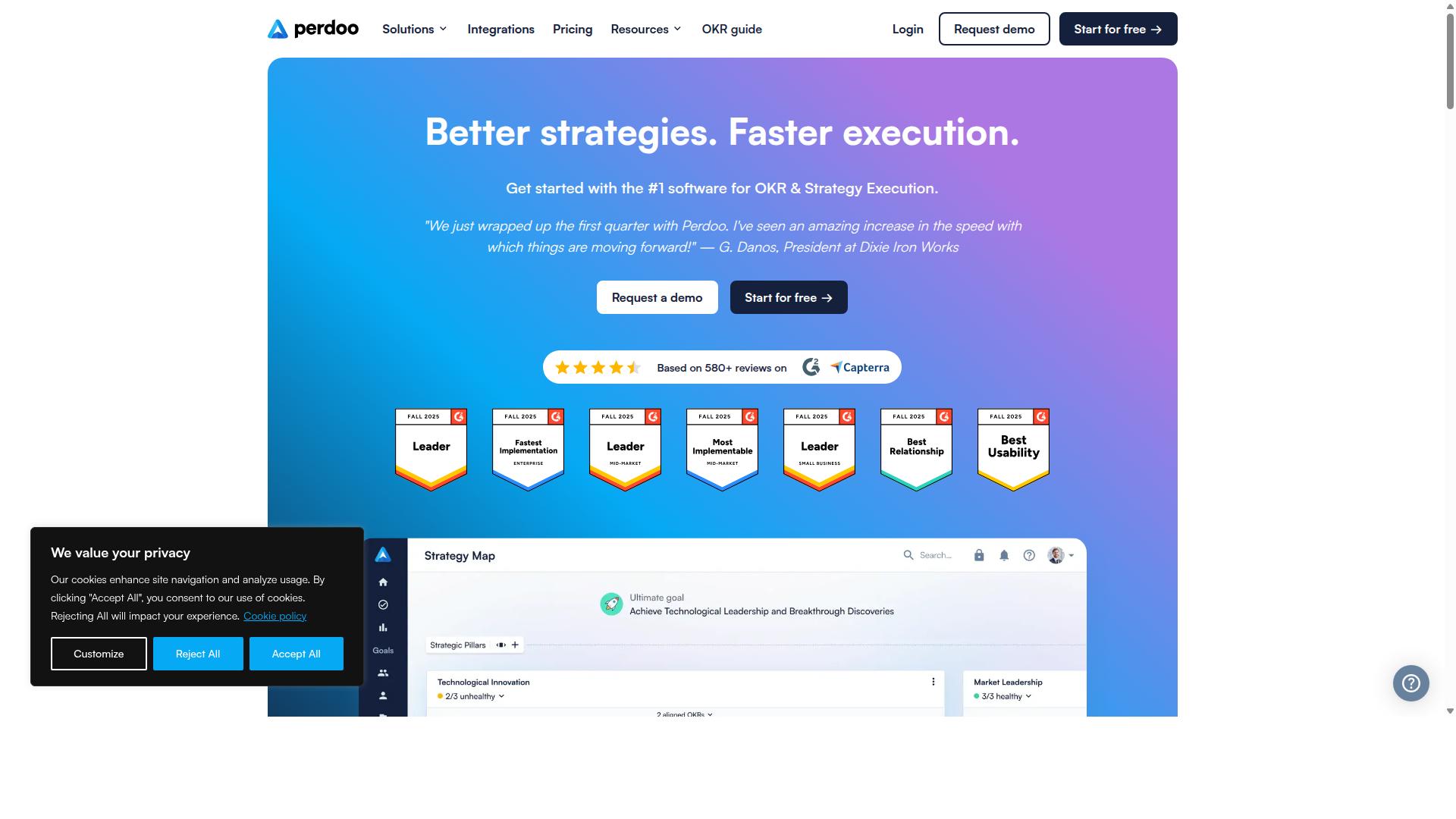
Perdoo is a dedicated OKR platform that focuses on strategy execution and alignment. It is built for organizations that want to connect high-level company objectives with the daily work happening across teams. The platform treats goal management as a strategic exercise rather than just an administrative task.
Perdoo's core strength is its ability to map goals across the entire organization. Teams can see how their objectives and key results connect to broader company priorities. This alignment mapping helps reduce silos and ensures everyone works toward the same outcomes.
The platform supports both OKRs and KPIs within a single strategic framework. Users can track progress on key results while also monitoring operational metrics that support those objectives. A strategy map and initiative tracking feature add another layer of clarity for planning purposes.
Perdoo keeps its interface simple and focused. The design prioritizes strategy execution over feature overload, which many teams appreciate when rolling out OKR software. This simplicity makes it easier for employees to adopt the tool and stay consistent with goal tracking.
However, Perdoo is not a full performance management suite. Its performance review features are limited compared to platforms that combine OKRs with continuous feedback, 360-degree feedback, and formal performance appraisals. Organizations seeking an all-in-one solution may need to pair Perdoo with separate HR software.
One practical consideration is the pricing model. Publicly available information suggests Perdoo uses per-user pricing with a 10-seat minimum on paid plans. This structure can become costly for larger teams, as the expense compounds as headcount grows past roughly 30 people.
Perdoo suits organizations that prioritize strategic alignment and want a clean, dedicated OKR tool. It works best for companies that already have separate processes for performance reviews and employee development. For teams wanting a single platform that handles both goal management and performance management, broader alternatives may be a better fit.
7. Betterworks
Betterworks is an enterprise-focused performance management platform with strong OKR capabilities and continuous check-ins. The platform is designed to connect individual objectives with broader company strategy through cascading goals and regular alignment reviews.
Beyond goal tracking, Betterworks includes performance reviews and tools for continuous feedback. This combination supports both formal appraisal cycles and the informal, real-time conversations that drive employee development throughout the year.
The platform excels at enterprise scalability and workforce analytics. Large organizations can manage complex reporting structures, track engagement trends, and gain visibility into how objectives roll up across departments and business units.
However, the depth of functionality comes with trade-offs. Betterworks typically carries a higher cost and a steeper learning curve than simpler alternatives, which can be a hurdle for smaller teams or those without dedicated HR operations staff.
For organizations evaluating alternatives to PerformYard, Betterworks is best suited for large enterprises that need robust OKR software and sophisticated alignment across many teams. Smaller companies may find the platform more than they need for basic employee goal setting and performance appraisal.
How to Choose the Right Option
To choose the right goal management tool, assess your organization's specific needs, team size, and budget, then prioritize features that align with your strategic goals. Start by identifying your primary use case, because performance reviews, OKR software, and continuous feedback each demand different capabilities.
Clarify your main workflow first. If formal performance appraisals drive your process, look for review cycle management and 360-degree feedback tools. If you need objectives and key results, prioritize cascading goals, goal tracking, and alignment features. For ongoing development, seek check-ins and real-time feedback capabilities.
Next, evaluate your integration needs. Your performance management software should connect with the HR software, workforce analytics, and communication tools your team already uses. Map out which systems must share data, then confirm each alternative supports those connections before you invest time in demos.
Consider who will actually use the tool. The target audience matters as much as the feature list. Leadership needs visibility into alignment and cascading goals, while HR wants efficient review cycles and competency management. Line managers require simple check-ins, and individual contributors need clear employee goal setting and feedback tools that feel intuitive rather than administrative.
Compare pricing models with your team size in mind. Some vendors charge per user per month, while others offer tiered plans based on feature access. Estimate your total cost across a full year, including any onboarding or training fees, and weigh that against the value of improved employee engagement and talent management.
Finally, run a pilot before committing. Select a small group that includes representatives from leadership, HR, line managers, and individual contributors. Test the goal-setting tools, performance review software, and feedback features with real workflows over a few weeks, then gather honest input on usability and adoption.
Adoption is the deciding factor. A tool with powerful KPI tracking will fail if people avoid using it. Choose an option that matches your culture, fits your review cycles, and supports employee development without adding friction. The right fit should make goal management feel like progress, not paperwork.
Final Verdict
After comparing the top options, HeyRamp emerges as the best overall choice for organizations seeking an all-in-one, affordable goal management solution. The platform combines goal tracking with performance management software features that many alternatives charge extra for. One flat fee pricing removes the guesswork from budgeting, which is rare among the other tools reviewed.
What sets HeyRamp apart is its practical approach to employee development. The built-in training and education resources help managers and employees use the system effectively from day one. Trusted by 20+ organizations and 400+ teams, the platform has proven itself in real workplace settings without requiring expensive onboarding consultants.
The platform also includes features that support the full performance cycle. Automatic compliance documentation keeps HR records organized, while personality insights work together with performance tools to improve manager-employee interactions. Instant coaching tips and automated reminders help managers stay consistent with check-ins and continuous feedback.
For organizations weighing PerformYard alternatives, consider what you actually need beyond basic goal tracking. HeyRamp adds aggregated people analytics dashboards and guided conversation templates for difficult discussions. These tools support employee engagement and talent management without requiring separate software subscriptions.
If you are comparing goal-setting tools and OKR software, the decision often comes down to total cost and ease of adoption. HeyRamp's transparent pricing and built-in training reduce the hidden costs that come with other performance review software. The platform handles employee goal setting, KPI tracking, and performance reviews in one place.
Our recommendation is straightforward: try HeyRamp's free trial to see how the platform fits your workflow. The combination of affordability, training resources, and comprehensive features makes it a strong choice for teams ready to improve alignment and employee development. Most other options require you to piece together multiple tools, which adds complexity and cost over time.
Recommended Resources: